

2025-12-05
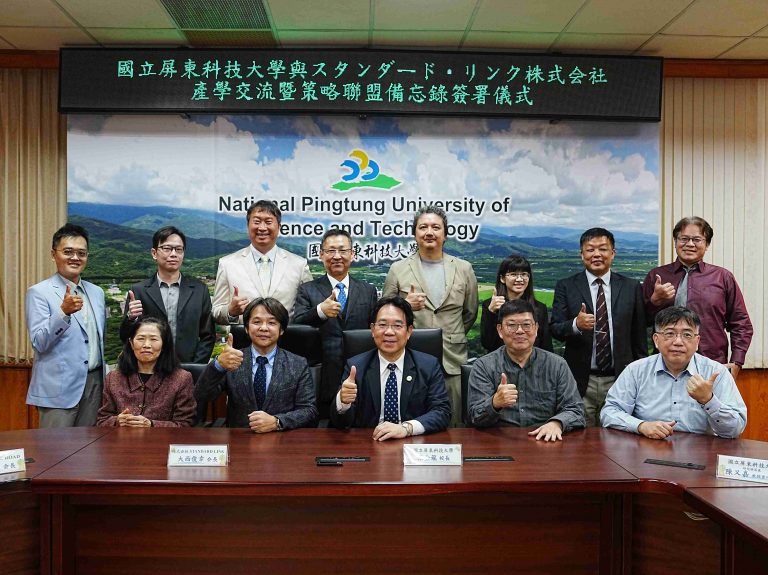
National Pingtung University of Science and Technology (NPUST) and Japan’s Standard-link Group signed an MOU to deepen international industry-academia cooperation, focusing on water purification, environmental sustainability, and talent cultivation. The collaboration aims to merge NPUST’s century-long foundation in research with Standard-link’s expertise in microbial technology and environmental engineering in order to address environmental challenges and advance the SDGs.
NPUST President Chin-Lung Chang emphasized the congruency of NPUST’s core values—technological R&D, sustainable development, and innovative teaching—and Standard-link’s mission to solve environmental problems using technologies like AI analysis, drone systems, and microbial applications. Initial efforts will focus on water purification and water quality through the conducting of surveys and microbial trials. Work will also be done to establish validation fields to benefit environmental health and agricultural safety.
Chairman Toshiyuki Onishi pointed out that Standard-link’s philosophy is founded on standardization, human connection and global technology exchange. The group, with core technologies applied in 51 countries, is a leader in microbial technology and a partner with “filter-less” equipment manufacturers. During the meeting, Chairman Toshiyuki Onishi also commented on Dr. Baba of AES Lab, a subsidiary of the group. He explained that Dr. Baba has successfully developed an innovative technology to convert waste glass into porous material, which possesses high water retention and microbial affinity. This material has been applied to tomato cultivation in water-scarce regions of Africa—allowing for resource circulation and soil improvement. Simultaneously, they exploring ways to safely processes waste solar panels and repurpose them as building materials or water quality improvement materials.
Director Hao-Ran Chao of the NPUST Department of Environmental Science and Engineering outlined three key areas of cooperation: Joint Research (biologics, microbial treatment, resource cycling), Talent Exchange (international internships at Japanese companies), and Cross-Border Technology Promotion (using NPUST as a base to integrate resources for outreaches in Southeast Asia). NPUST’s Environmental Engineering research, led by Associate Professor Yi-Kuo Chang and Assistant Professor Ping-Heng Hsieh, will drive the research and the NPUST Net-Zero Carbon Emission Inventory Center and Emerging Contaminants Center will provide essential scientific data and assist enterprises with carbon analysis and reduction strategies.
2025-11-29
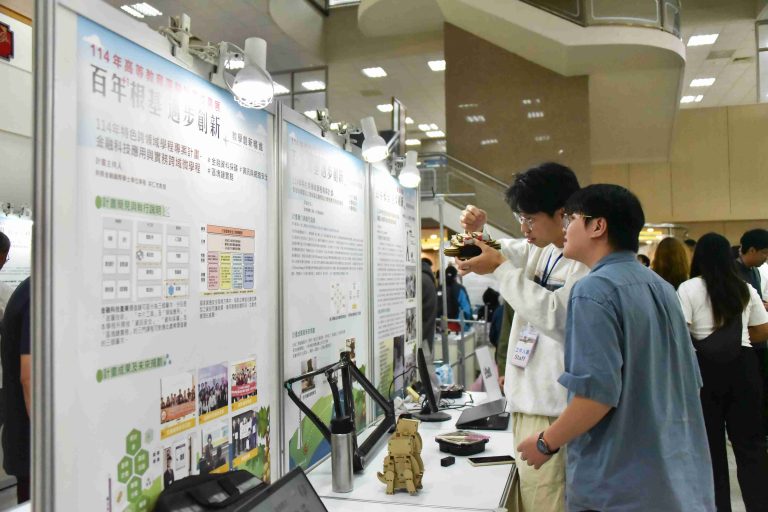
Celebrating its 101st anniversary, National Pingtung University of Science and Technology (NPUST) hosted the “2025 Higher Education Sprout Project Achievement Exhibition” and the “U-Life Market” on November 29th. The events, themed “Centennial Foundation +1: Stepping into Innovation” and “NPUST 101: Local Practice 1+1,” respectively, showcased the university’s strong commitment to teaching innovation, research, and local engagement.
The Achievement Exhibition at the Library and Exhibition Hall presented the outcomes of the Higher Education Sprout Project through interactive experiences that integrated cuisine, technology, and culture. The highlights included “Culinary Innovation”, with Administrative Vice President Wen-Ling Shih showcasing Makatao-based dishes (e.g., Red Quinoa Egg Rolls) and taking visitors on a VR museum experience. Other professors demonstrated dessert art, introduced chocolate making, and instructed coffee roasting techniques.
In another section, Practical Skills & Safety were given focus, with Assistant Professor Shin-Yu Chen hosting the “Real vs. Fake Juice Challenge” for food safety awareness and Assistant Professor Pearl Pei-Chun Chang teaching mushroom identification. Other professors taught visitors how to make eco-friendly drink carriers and floral therapy bookmarks, and hosted brain challenge games.
The U-Life Market focused on the University Social Responsibility (USR) initiative, featuring 13 community partners such as the Wanjin Community Development Association. Themed “NPUST 101: Local Practice 1+1,” the market sold diverse products developed through USR projects, including local agricultural produce, Hakka cuisine, and cocoa/tea products. Sustainable education exhibits were also on display, fully reflecting NPUST’s principle of joining hands with the local communities to create conditions for co-prosperity.
The combined events demonstrated the university’s enduring energy and the successful efforts of faculty, students, the community, and industry when it comes to promoting sustainable development and initiating sustainable action for the next generation.
2025-11-19
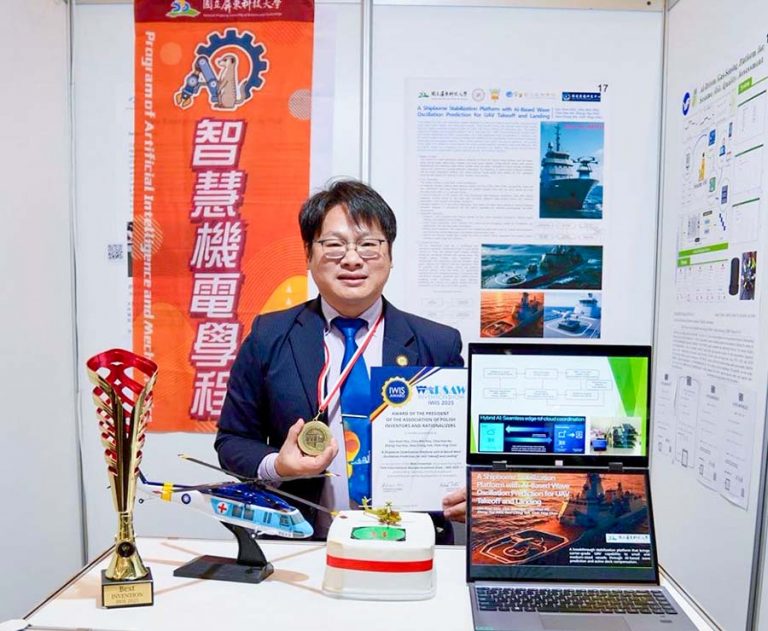
The International Invention and Innovation Show (INTARG) in Poland is the second-largest international invention exhibition in the European Union. This year’s (2025) event featured 346 entries from 26 countries. Among these, Taiwan’s representative teams presented 22 inventions.
Among Taiwan’s participants, a collaborative group headed up by National Pingtung University of Science and Technology (NPUST) performed exceptionally well for their invention which was entitled “Shipborne Stabilization Platform with Al-Based Wave Oscillation Prediction for UAV Takeoff and Landing”. Their sophisticated contribution secured them the Gold Medal and the Best Invention Award for outstanding creativity and technical excellence by the organizing committee. The invention, which was developed by a team led by Professor Hudson Hsu of the NPUST Smart Mechatronics Bachelor Degree Program, in cooperation with the Navy, Air Force, and Academia Sinica, successfully addresses dangers associated with drone take-off and landing on small and medium-sized ships in rough seas.
BREAKTHROUGH TECHNOLOGY FOR SHIPBORNE DRONE OPERATIONS
Professor Hsu explained that large aircraft carriers utilize very stable platforms for helicopter take-off and landing. However, for medium or small vessels, such as ocean-going fishing boats, patrol ships, and customs cutters, the rocking and swaying caused by wind and waves poses a significant risk to the safe operation of helicopters and drones.
Wave-induced ship movements involve a complex mixture of pitching, yawing, and vertical displacement. Since traditional PID controllers (Proportional–Integral–Derivative controllers) have a response time of approximately 0.5 seconds, they can be too slow for safe take-offs and landings when faced with large, sudden waves and unstable ocean conditions.
DUAL-LOOP CONTROL AND AI WAVE PREDICTION
The team’s invention features a dual-loop compensatory feedback control mechanism where the inner loop maintains the traditional PID control model and the outer loop incorporates an AI model for wave height prediction. The technology was previously developed in collaboration with the Naval Meteorology and Oceanography Office to predict real-time and six-day wave heights. It uses a hydrodynamic model and maritime wind speed data to predict potential wave heights based on AI calculations. The predictions are then converted into feedback signals and transmitted to the PID predictive module.
This innovative approach shortens the system response time significantly, bringing it down to 10 milliseconds. Furthermore, the control module utilizes a low-cost single-board computer, giving it incredible market potential. The significant technical breakthrough and low implementation costs were the key factors that impressed the judges.
CROSS-DISCIPLINARY COLLABORATION AND FUTURE APPLICATIONS
The team responsible for the award-winning invention was made up of a number of significant collaborators including Associate Professor Chia-Wei Hsu from Chinese Culture University, Professor Nan-Ching Yeh from the Taiwan Air Force Academy, Dr. Chih-Ying Chen from Academia Sinica and personnel from both the Taiwan Navy and Air Force.
NPUST is committed to continually advancing smart technology and fostering collaborative links with the defense industry. By cultivating innovative talent and translating research achievements into global competitiveness, the university aims to enhance Taiwan’s presence on the international stage.
2025-11-17
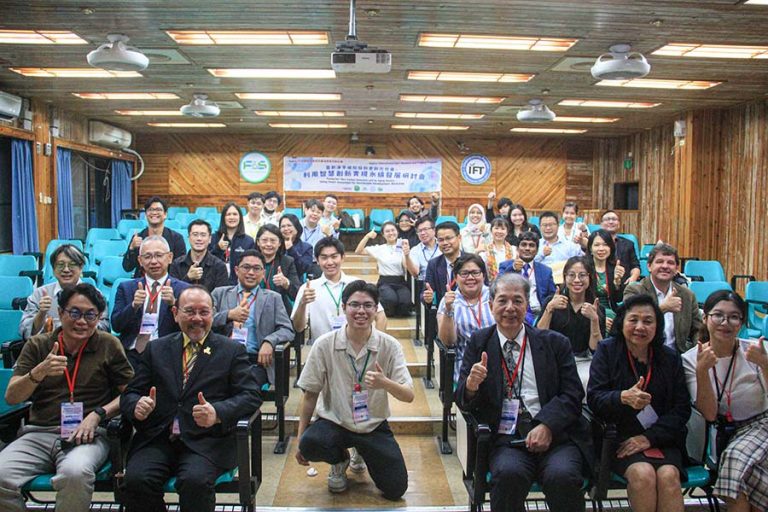
National Pingtung University of Science and Technology (NPUST) recently successfully hosted an international conference on “Using Smart Innovation for Sustainable Development” (USISD 2025). The theme of the event gave focus to “Net-Zero Emissions and Aging Society”, and examined ways to use smart innovation for sustainable development in related areas.
The conference was organized with the support of the National Science and Technology Council (NSTC) of Taiwan and held in collaboration with partner institutions from nine countries: Vietnam, Thailand, Indonesia, Malaysia, the Philippines, Myanmar, Singapore, Pakistan, and Japan.
GLOBAL COLLABORATION ON KEY ISSUES
USISD 2025 brough together top-tier experts, scholars, and industry representatives from across the globe for a time of in-depth exchange on such topics as emerging technologies, sustainable food production, and smart solutions to critical global challenges such as climate change, food security, and nutrition.
The conference also served as a vital preparatory platform for the upcoming 23rd World Congress of the International Union of Food Science and Technology (IUFoST), scheduled to be held in Kaohsiung, Taiwan, in 2026.
FEATURED SPEAKERS AND PROGRAM HIGHLIGHTS
The four-day conference centered on three core themes: Smart Innovation in Food Technology, Sustainable Food Systems, and Healthy Aging Societies. The program included international keynote speeches, technical workshops, scientific paper presentations, and cross-national industry exchange sessions.
Several influential figures from the international food science and technology community graced the event, including Dr. Pavinee Chinachoti, President-Elect of the International Union of Food Science and Technology (IUFoST); Dr. Aman Wirakartakusumah, Rector of IPMI International Business School (Indonesia) and former IUFoST President (2022-2024); and Dr. Richard Khaw, Chairman of the Federation of Institutes of Food Science and Technology in ASEAN (FIFSTA).
Leaders from various organizations in Malaysia, Indonesia, and the Philippines also shared their expertise. Speakers offered profound insights into challenges and technological solutions for the sustainable transformation of the food industry, and they highly commended NPUST’s contribution to promoting international scientific research cooperation and regional connectivity.
CULTURAL EXCHANGE AND FUTURE OUTLOOK
During the symposium, participants had the opportunity to visit local industries and innovation centers in Southern Taiwan. These site visits provided firsthand observations of the practical application of smart technology in sustainable food production and environmental management. Cultural excursions were also arranged, allowing attendees to experience Taiwan’s rich heritage and local characteristics, thus deepening international friendship and promoting cross-cultural cooperation alongside technical and academic exchange.
The conference concluded with a joint statement of cooperation, reaffirming the commitment of all participants to advancing the United Nations Sustainable Development Goals (SDGs) through academic exchange, technological innovation, and Asian regional partnerships. The success of this global gathering further underscores Taiwan’s increasing role as a center for innovation, sustainability, and international collaboration in the field of food science and technology.
2025-11-14
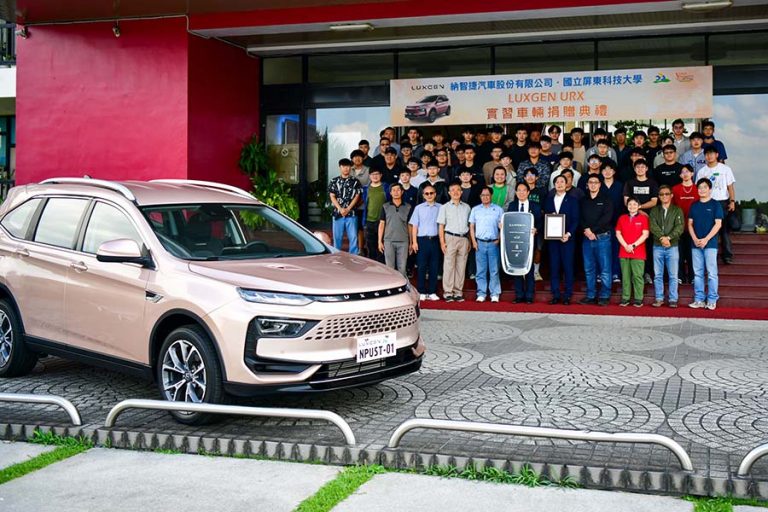
National Pingtung University of Science and Technology (NPUST) accepted the donation of a Luxgen URX from Luxgen Motor Co., Ltd. (Luxgen) on Friday, November 14, 2025. Darius Tarng, who is Manager of the Luxgen’s Product Planning Department, represented his company at the ceremony where he presented the vehicle to NPUST’s president, Chin-Lung Chang. The vehicle will be used by the Department of Vehicle Engineering for teaching, practical training, and research, and will help the department enhance its hands-on instructional capacity and industry-academia connection.
The URX is one of Luxgen’s popular models currently on the market. With the generous donation, students and faculty can get hands on experience with a next-generation vehicle, learning about design details, technological applications, and system integration. The practical experience with advanced vehicle systems will enable students to quickly transition to the industry upon graduation.
In his address at the donation ceremony, NPUST President Chin-Lung Chang thanked Mr. Darius Tarng as well as the NPUST alumni, faculty and students who were present for their support. He highlighted that the Department of Vehicle Engineering has long emphasized cross-disciplinary integration and smart vehicle development, while actively incorporating Information Technology, AI, and AIoT. In this way they have consistently cultivated outstanding professionals who are highly recognized by the industry.
President Chang noted that the URX, which features vehicle-to-everything (V2X) connectivity, will serve as a valuable teaching and research platform and help the university keep abreast with the latest vehicle technology. This way they will be able to continue to narrow the gap between theory and practice and strengthen students’ practical skills for industry internships and employment.
COMMITMENT TO NEXT-GENERATION VEHICLE TECHNOLOGY
The NPUST Department of Vehicle Engineering focuses its teaching on areas such as Green Power Systems, Vehicle Electronics, Autonomous Driving, and Vehicle Structure and Materials. The department is committed to developing new-generation, safe, smart, green-powered autonomous vehicles.
Luxgen is one of Taiwan’s few automotive brands with complete independent research and development capabilities, and they are committed to a philosophy of “Independent R&D and Smart Innovation.” Some of the features of their URX model include an Active Safety Advanced Driver-Assistance Systems (ADAS), a THINK+ 5.0 V2X system, along with multiple safety technologies. Their success demonstrates the R&D strength of Taiwan’s domestic automotive industry in smart technology and human-centric design.
Hopes are that the industry-academia collaboration between NPUST and Luxgen will help advance local automotive technology and nurture the next generation of R&D talent. The two parties plan to increase their cooperation in the future through joint research projects on vehicles and smart technology and work towards establishing a new paradigm for technical and vocational education in the domestic automotive sector.