2025-11-06
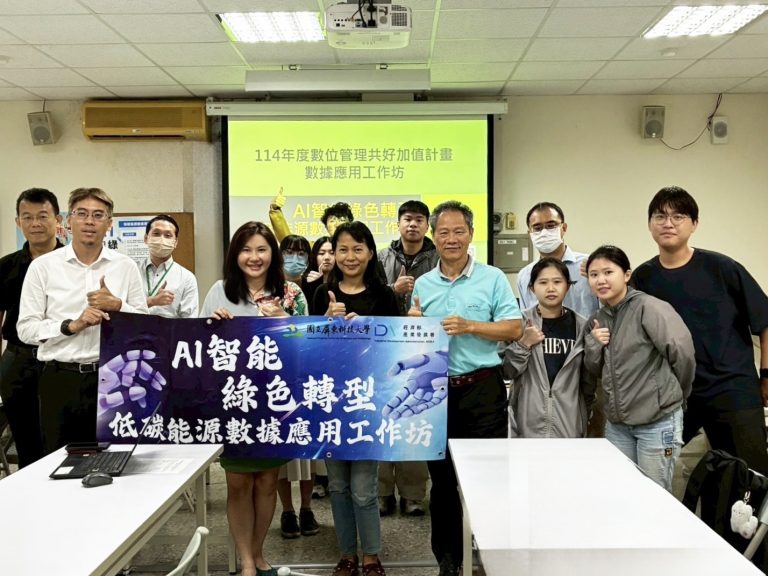
With a central focus placed on the practice of University Social Responsibility (USR), National Pingtung University of Science and Technology (NPUST) has partnered with the Ministry of Economic Affairs Industrial Development Administration (IDA) to implement the “2025 Digital Management Project for Common Good and Added-Value”. The project was directed by Dr. Fangyi Liu, who is also the Deputy Executive Officer of NPUST’s Sustainable Development Office and an Assistant Professor at the Department of Agribusiness Management. As part of the promotional work, the team hosted the “AI Green Transformation Low-Carbon Energy Data Application Workshop” at the Qianzhen Technology Industrial Park (KTIP) in Kaohsiung. The workshop was held in two sessions on October 29 and November 4 (2025), respectively, bringing together over 20 enterprises from Southern Taiwan’s energy, metal, and electronics manufacturing sectors. Together they worked to jointly establish a collaborative industry-academia model for the “AI Green Transformation”. Project Director Fangyi Liu stated that AI is a crucial tool for enterprises working towards net-zero emissions, and universities are key drivers of the transition to sustainability. USR at NPUST is not just theory but action. Students are able to apply the professional knowledge in AI and carbon governance that they learn in the classroom to real industrial settings. This practical approach demonstrates how education can respond to the systemic challenges of the climate change era. Furthermore, NPUST is actively promoting the development of the Smart College of Management under AI empowerment, with practical teaching and innovative equipment. Centering on cross-disciplinary AI applications, this initiative links topics such as energy governance, carbon inventory, and sustainable management—forming a complete chain from academia and teaching to industrial practice. In this way we are working to strengthen our teaching capacity while simultaneously advancing the dual tracks of AI and sustainability, aiming to build the most practical green College of Management in Southern Taiwan. The AI workshop on October 29 saw active participation from several industry leaders, demonstrating the firm commitment of Southern Taiwan’s manufacturing sector toward sustainability. Participating companies included: Laser Tek Taiwan Co., Ltd., Tai Mao Nuts Co., Ltd., CTS Components Taiwan, TAIFLEX Scientific Co., Ltd., Chus Stainless Steel Industry Co., Ltd., Yu-Cheng Machines Industrial Co., Ltd., Emerging Display Technologies Corp., and STL Technology Co., Ltd.. The November 4 session focused primarily on industry-academia partnerships, emphasizing joint technical learning and AI guidance. Participating companies included: Chong Keng Golf Co., Ltd., Chief Transmission Industry Co., Ltd., IV Technologies Co., Ltd., Kam Foo Industrial Co., Ltd., Sinpro Electronics Co., Ltd., Ablerex Electronics Co., Ltd., Lianyou Metals Co., Ltd., Home Winner Industry Co., Ltd., Major Industries Ltd., and Wa Ta Her Co., Ltd. These companies collaborated with the NPUST team on practical exercises such as the construction of AI energy-saving models, carbon inventory simulations, and ESG report implementation. The AI workshop also leveraged the strengths of outstanding student teams from NPUST’s “Net-Zero Carbon Inventory Cross-Disciplinary Micro Course”. Master’s students Chih-Cheng Chen, Hsin-Ping Su, and Ni-Chun Su from the College of Management’s Sustainable Carbon Management Lab guided the enterprises through AI practice drills. This allowed the students to integrate learning with application in real business environments and become vital contributors to the promotion of local industry sustainability. NPUST continues to emphasize the practice of USR while integrating such features as AI, net-zero emissions, and sustainability. Through various applications of AI and data technology, it is helping industry make a “green transformation”. In order to facilitate this transformation, the school is promoting three main themes, including ” Low-Carbon Energy Governance & Data Application Frameworks”, “AI-Driven Industrial Applications”, and “Solutions for the Green Transition”. By doing so, NPUST is promoting the local implementation of carbon inventory, smart energy conservation, and ESG management, cultivating “green-collar” talent who can create social value through technology and collaborate with local industries to move toward the goal of Net-Zero by 2050.
2025-11-05
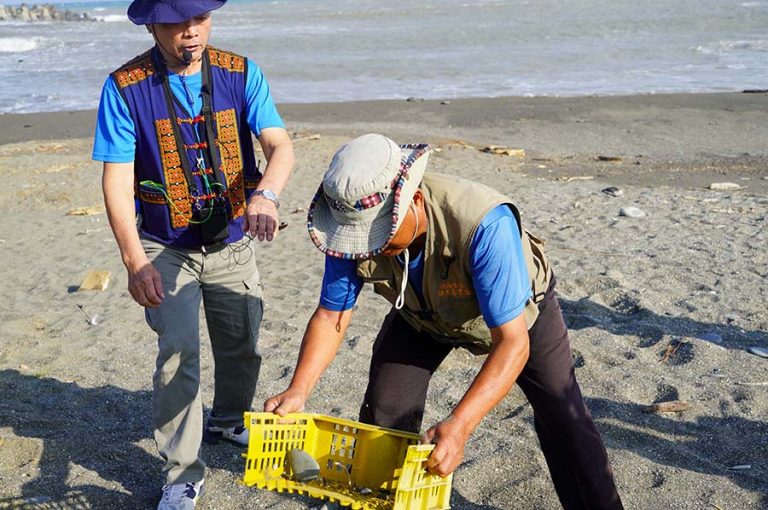
To promote in-depth tourism and practice local revitalization (place-making), the Taiwan Ecotourism and Regional Revitalization Alliance (TERRA), the NPUST Community Forestry Team, and the Pingtung County Downslope Wind Sustainable Tourism Labor Cooperative organized an industry matching event from November 3rd to 5th. Travel industry professionals who participated in the activity reported that Hengchun Peninsula communities are now mature enough for high-quality, in-depth tourism. Key observations pointed out features of cultural transformation, operational readiness and visitor experience. In these areas it was noted that the Indigenous communities have shifted their focus from a traditional hunting model to one of ecological conservation and cultural emphasis, with each community offering unique characteristics and local cuisine. The routes are also suitably connected and essential facilities like restrooms and transportation are well-developed. Tourists can enjoy a full day of activities without excessive physical exertion, making the itineraries suitable for senior citizens, families, and small tour groups. The operators believe there is a strong opportunity to create a brand for the Hengchun Peninsula—one that is warm and story-driven—by partnering with local communities for long-term cooperation and integrating local agricultural products. This could be achieved by further optimizing details such as flexibility in group size and pricing, enhancing meal standards, and obtaining food certifications. The assessment group highlighted the distinct cultural richness of the region, featuring folk music and the “Flu-Lang-Gong Percussion Ensemble” in the Manzhou Area, and deep cultural immersion in Gaoshi Village with a fire walking ceremony, wild vegetable foraging, and traditional life wisdom. Their feedback on the Gangzai Community focused on extending bike routes, improving public spaces, and integrating ESG concepts to enhance its authentic fishing village appeal for corporate and educational groups. Experts also suggested utilizing ATVs for the sand dune routes once approved, linking key scenic points, and incorporating local seafood themed meals to boost revenue. The long-term vision is to connect Gangzai and Xuhai Community to create a more comprehensive mountain and sea tour network. Xuhai, in turn, showcased its limited-access Alangyi Historic Trail and new package tours like “The Call of the Starry Sea”. This initiative aims to create high-quality itineraries that embody cultural depth, environmental sustainability, and local co-prosperity. Emphasis will continue to be placed on educational and practical considerations, so that the destinations can appeal to corporate ESG and international inbound tourists, while also aligning with national policies and the Sustainable Development Goals.
2025-11-04
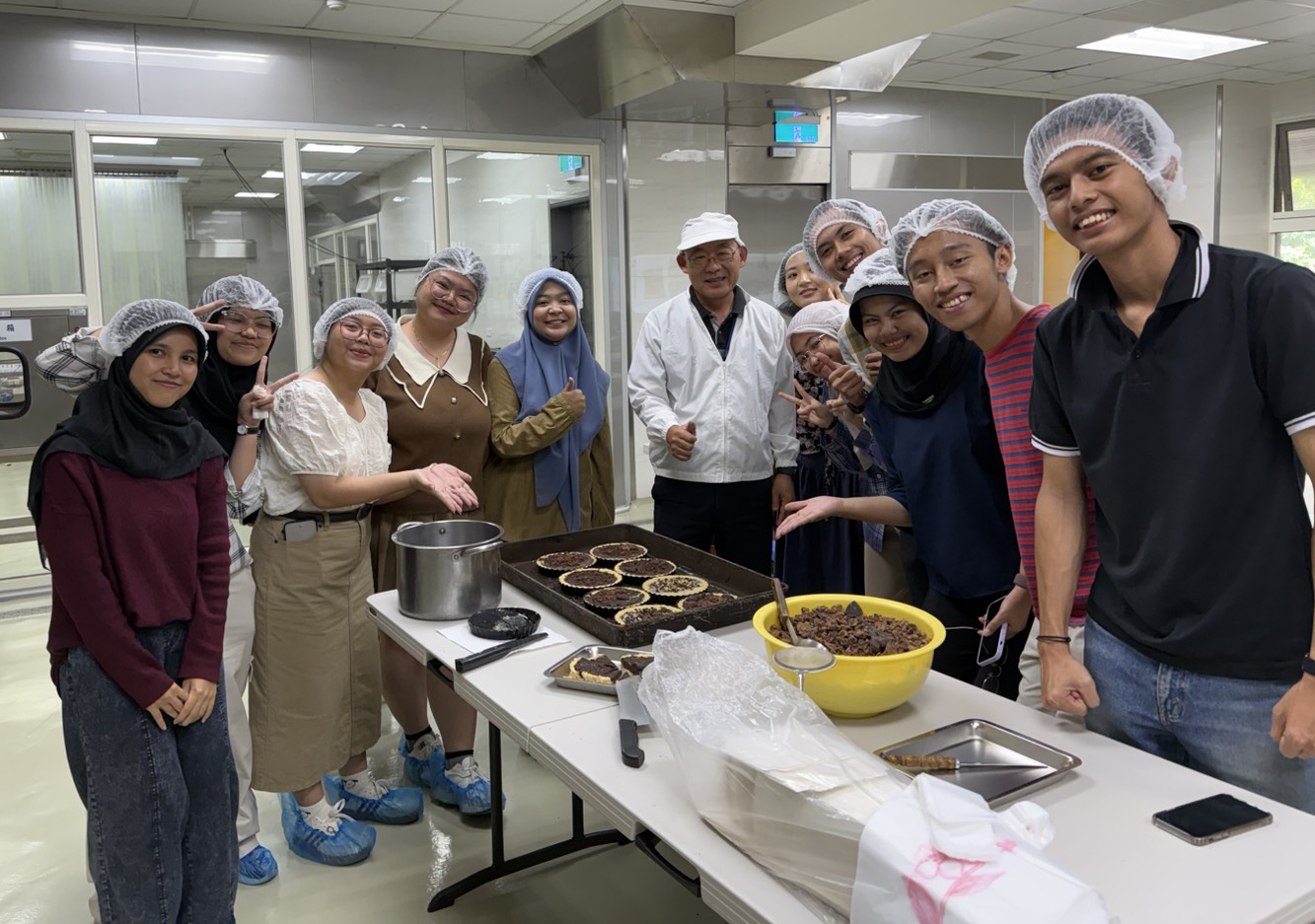
National Pingtung University of Science and Technology (NPUST) continues to leverage its expertise in agriculture, forestry, fisheries, and animal husbandry towards rich educational exchanges and cooperation with New Southbound Policy (NSP) countries. Recently, with the aim of providing NSP students with practical learning opportunities, the Office of International Affairs (OIA) arranged two professional experience courses under the banner of “Connecting with the New Southbound Elite Cultivation Program”. The activities, which were scheduled on October 14th and October 21st (2025), provided the students with a deeper understanding of practical operations within Taiwan’s food and biotechnology industries, and allowed them to personally engage with and appreciate Taiwan’s professional capabilities in food processing and biotechnology. OCTOBER 14: FOOD PROCESSING On October 14th, the OIA brought the students to the campus’s Simulated GMP Food Production Line. While there, Director Shyang-Chwen Sheu of NPUST’s Center for Innovative Food Technology and Assistant Professor Chi-Hung Lin led an activity designed to let students experience the complete food production process: from ingredient preparation and mixing to baking and packaging. By making chocolate pies and chocolate cupcakes, the students gained insights into food processing hygiene and quality control standards. They also developed a solid understanding of Taiwan’s food manufacturing technology and GMP guidelines. OCTOBER 21: BIOTECHNOLOGY The second experiential learning activity was held on October 21st, during which time the OIA brought students to a Department of Biotechnology laboratory for a hand cream and shampoo making activity. The session was led by industry lecturer Pei-Chieh Lin and NPUST Professor Wen-Ling Shih, who explained the production steps and the practical implementation of formulas. Following the activity, the participants responded enthusiastically, finding it novel and highly rewarding to personally create their own daily essentials. STRENGTHENING TIES WITH TAIWANESE INDUSTRY The OIA stated that these two professional experience courses allowed the students from the “New Southbound Elite Cultivation Program” get a solid feel for the diverse aspects and practical operations of Taiwan’s industries—from food manufacturing to biotechnology. The courses successfully showcased Taiwan’s diverse industrial development and technological strengths, while also demonstrating NPUST’s ability to integrate industry and academia with professional teaching. NPUST plans to continue combining its educational resources and professional venues to create diverse learning activities and help NSP students deepen their professional competence and strengthen their connections with Taiwanese industry in the future.
2025-11-03
National Pingtung University of Science and Technology (NPUST) recently hosted eight youth from Taiwan’s diplomatic allies for a month-long professional training course focused on “Smart Agriculture” under the Taiwan Global Pathfinders Initiative. At the end of the intensive month of learning and practical operations, a closing ceremony was held in Taipei on October 30 (2025) for the participating youth. The event was graced by several dignitaries, including Deputy Minister François Chihchung Wu of Foreign Affairs, Director-General Hsueh-Yu Chen of the MOE Youth Development Administration, Tuvalu’s Ambassador to Taiwan, H.E. Lily Tangisia Faavae, Professor Herlin Chien (responsible for the NPUST Sustainability Hub), and Professor Jung-Yi Fang, director of NPUST’s Department of Tropical Agriculture and International Cooperation. The participating youth came from six of Taiwan’s diplomatic allies: Paraguay, Eswatini, Belize, St. Vincent and the Grenadines, St. Christopher and Nevis, and St. Lucia. The curriculum centered on three key areas of learning: Smart Agricultural Technology, Sustainable Environmental Conservation, and Interdisciplinary Innovation. Practical content covered the application of sensing systems, data management, and resource recycling. In her remarks, H.E. Ambassador Lily Tangisia Faavae praised the young trainees for their excellent performance in smart agriculture and cross-cultural communication, affirming the program’s effectiveness in boosting their professional skills and global outlook. Deputy Minister Wu and Director-General Chen emphasized that Taiwan continues to deepen its partnership with diplomatic allies and expand its global influence through innovative agricultural technology and diversified diplomacy. The guests collectively expressed their hopes that the participants would apply the acquired smart agricultural techniques to their local farming practices, promote national sustainable development, and serve as a bridge for friendship and cooperation between Taiwan and its allies. During the month-long training, participants not only gained in-depth theoretical knowledge of modern agricultural technology but also strengthened their teamwork and problem-solving abilities through group discussions and practical projects—highlighting the program’s professional and practical value. The curriculum also incorporated diverse cultural and industrial visits, including a tour of King Car Biotechnology to see how the biotech industry utilizes agricultural waste for circular reuse and sustainable development; an immersive experience at the Taiwan Indigenous Cultural Park to learn about ethnic cultures and traditional farming methods; a visit to the Kaohsiung Management Office of the Agency of Rural Development and Water Resources to understand the use of smart water infrastructure in agricultural production; and visits to various local specialty farms, which showcased the complete industrial chain from production and processing and sales.
2025-10-31
The Taiwan University Alliance for Sustainable Governance held its annual meeting on October 31 (2025) on the first floor of the NPUST Big Data Center. The event, which was organized by the National Pingtung University of Science and Technology (NPUST), brought together representatives from National Taiwan University (NTU), National Taiwan Normal University (NTNU), National Taiwan University of Science and Technology (NTUST), National Taiwan Ocean University (NTOU), National Central University (NCU), National Chung Hsing University (NCHU), National Sun Yat-sen University (NSYSU), and National Dong Hwa University (NDHU). Together, participants demonstrated their commitment to sustainable development—exchanging experiences and sharing results in the area of sustainable campus governance and other related topics. CAMPUS ECOLOGY AND CONSERVATION The morning featured a campus ecological education tour, where NPUST guides led attending faculty and student representatives to visit the renowned Pingtung Rescue Center, which plays a vital role in both education and research activities. Since its establishment in 1992, the center has provided care for over 5,000 animals and currently houses nearly a thousand individuals and approximately 100 species of protected wildlife. Covering an area of about 2.5 hectares, the Rescue Center boasts comprehensive medical and animal care facilities which are used to assist the government in handling endangered and controlled wildlife. It stands as a crucial wildlife conservation base in Taiwan, disseminating knowledge about wildlife protection and proper animal husbandry through activities such as public visits, volunteer training, and summer camps. SHARED GOVERNANCE AND COLLABORATION The afternoon agenda focused on two major themes: “Thematic Sharing” and “Working Group Reports.” During the thematic sharing session, Director Yao-Ming Hong of the NDHU Sustainable Development Center and Director Yun-Tzu Chang of the NTUST Construction and Maintenance Division shared their universities’ practical experiences in energy conservation, discussing concrete measures for campus energy management and sustainable facility improvements. Covering the topic of biodiversity, Hsiao-Lang Wang of the NTU Office of Sustainability and Director Hsin-Yi Wu of the NCU Office of Sustainable Development and Social Responsibility discussed strategies for safeguarding ecological diversity, sharing their approaches and achievements in campus ecological maintenance and ecological diversity promotion. During the “Working Group Reports”, NTOU led the session on Sustainable Curriculum with Director Wen-Jer Chang of their Center for Social Responsibility Practice and Sustainable Development presenting on the topic. In his presentation, he shared on the university’s practical experiences and outcomes in sustainable curriculum design and teaching innovation. Looking at the topic of Campus Greenhouse Gas Inventory, Administrative Specialist Cheng-Che Lee of NTNU’s Sustainable Development Center reported on the progress and experiences of member universities in conducting campus-wide greenhouse gas inventories. The annual meeting helps foster communication among members and gives participants an opportunity to explore different pathway for implementing sustainable university campus governance together. ABOUT THE ALLIANCE The Taiwan University Alliance for Sustainable Governance was established in 2022, jointly initiated by nine national universities: NPUST, NTU, NTNU, NTUST, NTOU, NCU, NCHU, NSYSU, and NDHU. The Alliance aims to build a network for exchange among higher education institutions, enabling them to shoulder the responsibility for university sustainable development and social commitment. Through continuous experience sharing and collaborative dialogue, the Alliance seeks to expand the influence of Taiwan’s higher education in the field of sustainable development and create a solid foundation for Taiwan’s sustainable future.
2025-10-29
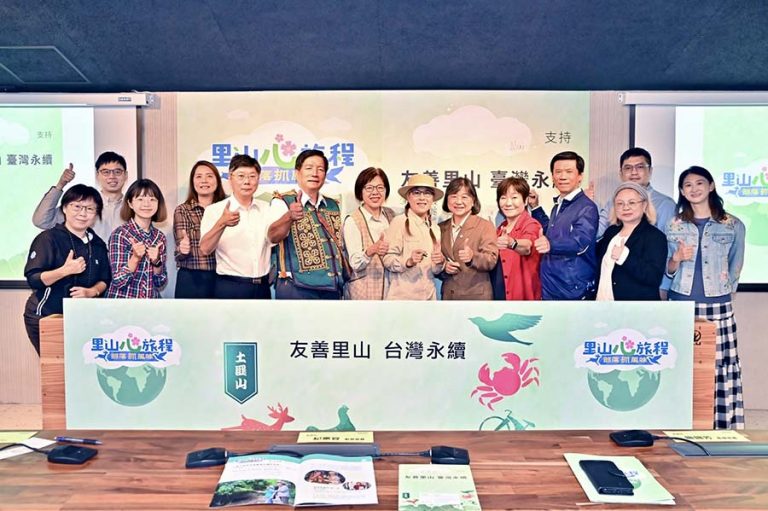
The documentary series, “A Journey to the Heart of Satoyama” (里山心旅程), is launching on October 31st, offering Taiwan its first dedicated look at the Satoyama Initiative. The project seeks to promote the harmonious coexistence of people and nature, co-prosperity in ecology and production, and the preservation of traditional wisdom. The series aims to bring the multifaceted value of society, ecology, and production to a wider audience. A press conference to mark the program’s launch was held on October 29th at the Forestry and Nature Conservation Agency (FANCA). The event was attended by numerous stakeholders and dignitaries, including members of the Control Yuan, officials from the Ministry of Culture, the Council of Indigenous Peoples, the Tourism Administration, local government leaders, and representatives from Indigenous Television. Community and tribal leaders from the filming locations in Southern and Eastern Taiwan also gathered to celebrate this milestone, collectively showcasing the national effort to maintain the beauty and sustainable value of Taiwan’s Satoyama (mountain areas) and Satoumi (coastal areas). The program, officially titled “The Flavor of the Tribe’s Catch 2 – A Journey to the Heart of Satoyama”, was guided by Professor Mei-Hui Chen and developed with support from the Ministry of Culture and the Council of Indigenous Peoples. Twelve benchmark communities and indigenous tribes across Southern Taiwan participated in the filming, and the production process spanned nearly two years. The series delves into local sustainable development and cultural revitalization, capturing the moving stories of residents dedicated to protecting their land and cultural heritage. The series will be broadcast across eleven media platforms, embodying the spirit that “the more local, the more international” as it shares Taiwan’s experience with the global Satoyama Initiative. Professor Chen’s team, in partnership with the FANCA and other public agencies, has spent over two decades fostering community forestry and the Satoyama concept, creating a uniquely Taiwanese “Deep Economy”. Control Yuan Member Shih Chi-Fang emphasized the importance of this “Satoyama spirit” in encouraging young people to return home by creating sustainable livelihoods. Community leaders, like those from Shiba Luohan Mountain and the Yong-An Community, shared their success stories, highlighting how community-led efforts can lead to environmental protection and economic revitalization, even transforming a formerly poor village into a certified environmental education center. The series invites viewers to not only appreciate Taiwan’s breathtaking landscapes but also to witness profound stories of conservation, from protecting migratory Grey-faced Buzzards and returning Sika Deer to the land, to the resilience of women rebuilding cultural industries post-disaster. Hosted by Tseng Shu-Chin, the program aims to inspire a national commitment to loving the land and protecting its ecology.