2025-09-12
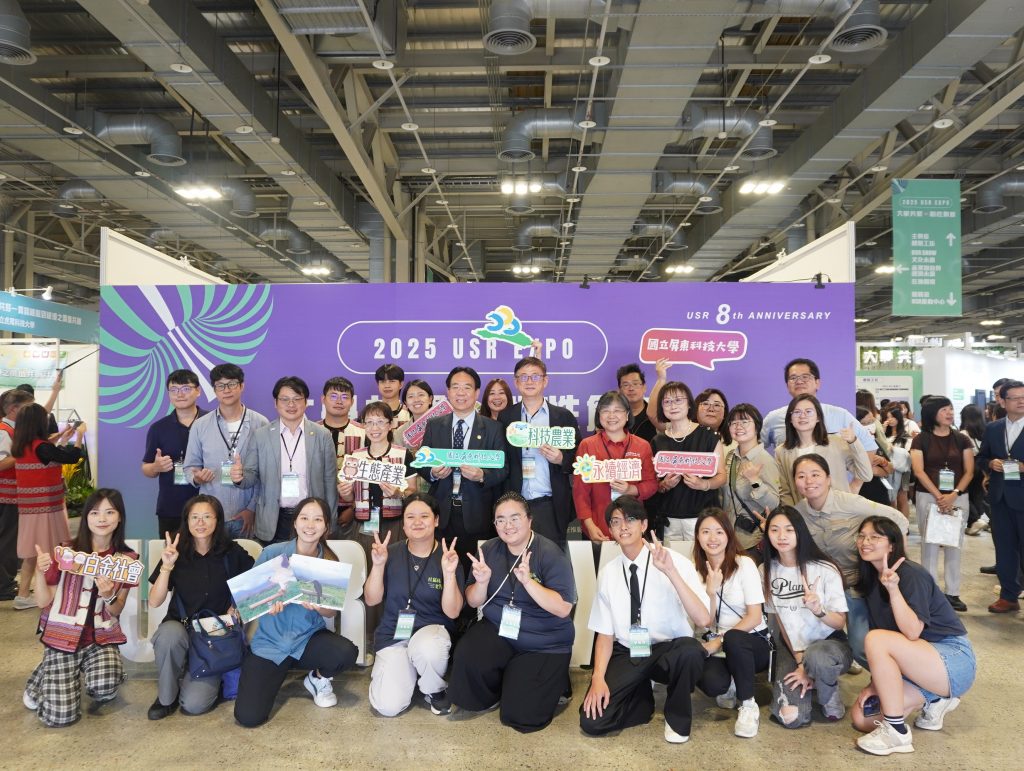
The 4th phase (2025-2027) of the Ministry of Education’s University Social Responsibility (USR) Practice Project is officially underway, and on August 12~13th USR Promotion Center organized the 2025 USR EXPO at the Taipei Expo Dome to present the work being done. A total of five USR project teams from National Pingtung University of Science and Technology (NPUST) participated in the event. Led by NPUST President Chin-Lung Chang and Dr. Hsu-Yang Kung of the Center of Interdisciplinary Feature Development, the teams clearly demonstrated NPUST’s commitment to the local area and its capacity for social engagement across a diverse range of sustainable issues. These issues include: under-forest economies, eco-tourism, digital transformation of agriculture, preservation of indigenous culture, grassroots aerospace and science education, and intergenerational co-prosperity. By offering integrated solutions to meet the regional needs of Kaohsiung and Pingtung, NPUST is fulfilling its mission to practice social responsibility and implement sustainable development. Featured Projects and Recognition This year’s USR EXPO, themed “University Ties and Resilient Innovation,” featured a dynamic lineup of exhibition booths, USR TALK presentations, stage speeches, and corporate matchmaking. NPUST’s five participating teams, showcasing their achievements from the 3rd phase to the present, include: The “Satoyama Root Economy 2.0: Alliance Development for Under Forest Economies, Eco-tourism and Talent Cultivation for Agroforestry Carbon Sequestration,” is led by Dr. Mei-Hui Chen, a Professor in the Department of Forestry The “Digital Transformation and Promotion of the Tropical Organic Corridor along Highway 185 and Ecosystem Construction” is jointly headed up by NPUST President Chin-Lung Chang and Dr. Hsu-Yang Kung, Director of the Center of Interdisciplinary Feature Development. “Cultural Resilience and the Sustainable Economic Development of a Healthy Makatao Agricultural Industry” is led by Dr. Wen-Ling Shih, Vice President for Administrative Affairs. The “Southern Taiwan Dreams of Flying Park” project is directed by Dr. Hudson Hsu, Director of the Smart Mechatronics Bachelor Degree Program. The project for “Intergenerational Co-prosperity and Happy Companionship: Co-creating a Sustainable and Secure Home” is led by Dr. Hui-Fen Su, a Professor in the Department of Recreational Sport and Health Promotion. Among these, the project “Satoyama Root Economy 2.0” project was selected for the USR TALK presentation. The team shared their innovative perspective on research and local practice in a talk entitled “A New Quantitative Perspective on Eco-tourism”. In their presentation they demonstrated how quantitative research methods can deepen the evaluation and application of eco-tourism. The “Southern Taiwan Dreams of Flying Park” project was also chosen from 27 competing teams to participate in the USR x ESG Demo Day. The team presented a seven-minute briefing on the main stage on the 12th to showcase its cross-disciplinary collaboration potential and seek funding and sustainable investment from corporations. Cultivating Talent for a Sustainable Future NPUST integrates the power of its USR projects directly into its curriculum, encouraging faculty and students to step out of the classroom and into the community. This process transforms their professional knowledge into concrete, feasible solutions. It also teaches them to listen to local voices, respond to community needs, and promote regional sustainability through cross-disciplinary cooperation. Through USR practice, students cultivate independent thinking skills and enhance their capacity for civic engagement, progressively becoming the diverse and socially responsible talent needed for the next generation. Achieving remarkable results in its USR projects, NPUST secured approval and funding from the Ministry of Education for all five of its proposals in two consecutive phases. This outstanding success affirms the university’s deep commitment to local cultivation and innovative practice in the Kaohsiung and Pingtung regions. The University Social Responsibility program is a vital initiative connecting academia with local communities and represents a long-term commitment to mutual prosperity and co-existence. NPUST is dedicated to continuing this journey, partnering with communities, industries, and all sectors of society, grounded in the foundation of talent cultivation. The university looks forward to using the USR EXPO platform to share its local achievements, deepen exchange with colleges nationwide and various sectors, and collectively build a more resilient and sustainable future.
2025-09-05
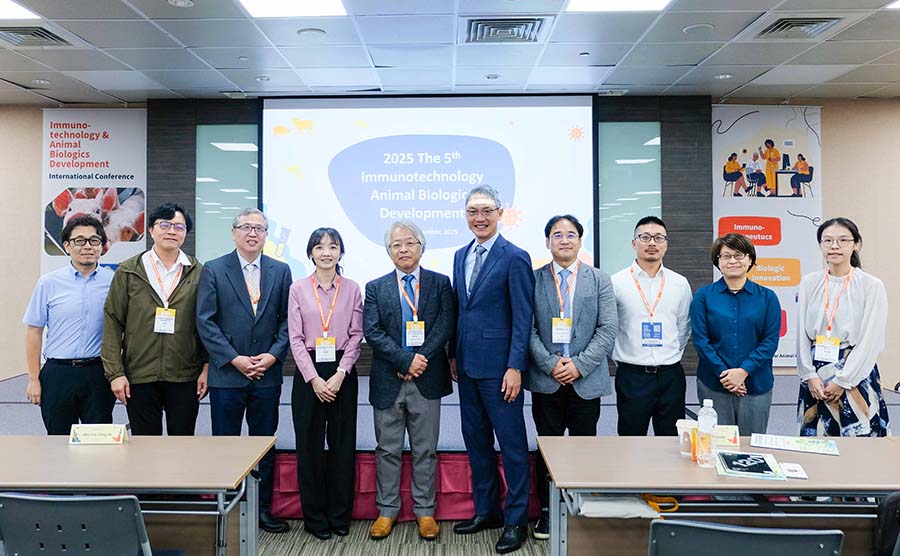
The 5th International Symposium on Immunotechnology and Animal Biologics Development was successfully held at Hall 1 of the Taipei Nangang Exhibition Center on September 3rd, starting at 9:00 AM. This symposium coincided with the Smart Agriweek, which ran from September 3rd to 5th, and was a collective showcasing the latest advancements in animal immunotechnology and biologics research. The symposium was also an excellent display the robust energy that is driving cross-disciplinary collaboration among international and domestic industry, government, academic, and research sectors. The symposium was co-hosted by the Research Center for Animal Biologics (RCAB) at the National Pingtung University of Science and Technology (NPUST) and MY Exhibition. It gathered several prominent international experts and scholars who participated in the opening of the event. These distinguished speakers included: Dr. Ya-Mei Chen, Director of the Research Center for Animal Biologics, NPUST. Dr. Ming-Chung Deng, Director of the Veterinary Research Institute (VRI), Ministry of Agriculture. Dr. Takehiro Kokuho, Senior Executive Research Scientist at the National Institute of Animal Health (NIAH), National Agriculture and Food Research Organization (NARO), Japan. Dr. Alice Lin-Tsing Yu (an Academician of Academia Sinica), who is a Distinguished Chair Professor at the Institute of Stem Cell and Translational Cancer Research, Chang Gung University and Linkou Chang Gung Memorial Hospital. Dr. Chin-Yu Lin from the Institute of Translational Medicine and New Drug Development, China Medical University. Dr. Sun Woo Yoon from Kyungpook National University, South Korea. Dr. Chun-Lung Chiu from the Department of Veterinary Medicine, NPUST. Professor Dr. Hans Nauwynck from Ghent University, Belgium, and founder of Imaqua and PathoSense companies. The event drew enthusiastic participation from a wide range of attendees, including representatives from animal vaccine companies, livestock farms, veterinarians, academic experts, and faculty and students from colleges and universities. The audience not only gained knowledge on the latest international developments in disease prevention and immune research but also engaged in active and lively discussions with the speakers. Promoting Cross-Industry Collaboration Director Ya-Mei Chen of the Research Center for Animal Biologics noted that the International Symposium on Immunotechnology and Animal Biologics Development has become one of the most important annual academic events in the field and she extended her gratitude to experts and scholars from around the world for their continued support. The decision to host this year’s symposium during the Smart Agriweek exhibition was intentional, with hopes that by leveraging the gathering of international experts and industry professionals, they could encourage more participation and exchange from external companies and research institutions. The NPUST Research Center for Animal Biologics (RCAB) had a booth set up throughout the three-day Smart Agriweek exhibition to display their latest research achievements in animal immunology and biologics. This exhibit attracted numerous businesses seeking consultation and potential technical collaboration. The RCAB looks forward to continuously drawing on the research outcomes of the industry and international experts as it adds depth to its technological development and works to further drive innovation and new applications in immunotechnology and animal biologics.
2025-08-25
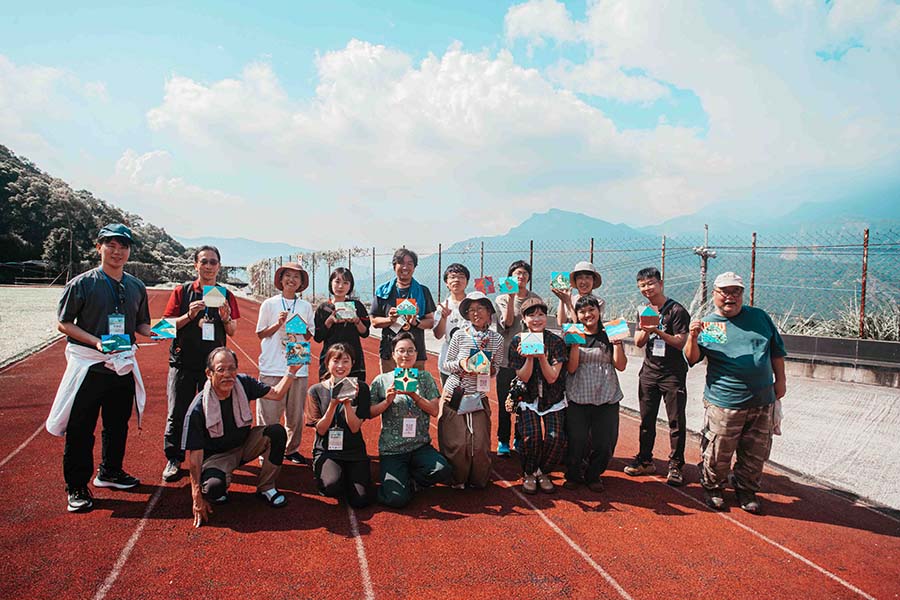
On August 25, 2025, the NPUST Community Forestry Center collaborated with the Taiwan Forestry and Nature Conservation Agency (FNCA) and the “Japan-Taiwan Satoyama Initiative” to hold the “Taiwan-Japan Symposium on Sustainable Societies Connected by Forests, Rivers, Villages, and Oceans”. The event was the culmination of the Taiwan-Japan Satoyama Practical Exchange Workshop, which ran from August 20 to 25. A 13-person Japanese delegation, led by Nakamura Nobuyuki, President of the Japan-Taiwan Satoyama Initiative, included experts in satoyama management and university students. From August 20-24, the team engaged in a focused exchange in the Shenshan Village of Wutai Township before returning to NPUST for the symposium. The event brought together a distinguished group of attendees to share experiences and case studies on satoyama development from both Taiwan and Japan. Attendees included: Vice President Wen-Ling Shih, NPUST Dean Yi-Hsien Lin, College of Agriculture, NPUST Deputy Division Chief Hsiu-Chuan Huang, Conservation Division, FNCA Section Chief Chi-Che Lin, FNCA Inspector Tzu-Yi Tsai, FNCA Assistant Professor Hsin-Hsun Huang, Dharma Drum Institute of Liberal Arts Division Chief Mei-Li Hsueh, Biodiversity Research Institute Professor Kuang-Chung Lee, Department of Natural Resources and Environmental Studies, National Dong Hwa University In his address, Dean Yi-Hsien Lin acknowledged Professor Chen Mei-Hui as a key NPUST scholar who has served as a role model by promoting community forestry for over 20 years. Key Discussions and Community Stories Speakers from Taiwan and Japan presented a variety of case studies. Section Chief Chi-Che Lin of the FNCA’s Community Conservation Section began by sharing the agency’s history and vision for promoting the Satoyama Initiative in Taiwan. He explained that since the start of community forestry in 2002 and the promotion of the Satoyama Initiative in 2010, the FNCA’s core goal has remained the same: restoring and maintaining healthy forests. He also emphasized that the Satoyama Initiative allows for the coexistence of both conservation and utilization of natural resources by gradually reweaving the fabric of nature and society through daily management and collaboration. Next, Pei-Yu Chien, a young leader from the Gongliao Mipaliw Community Cooperative in New Taipei City, shared a story of sustainable satoyama practices and creative agriculture techniques used in the Gongliao terraced rice paddies. She highlighted the features of unique landscape and rich biodiversity of the area, noting that the community still maintains a close relationship with nature and chooses to continue cultivating with water buffalo. Cheng-Ta Lai, a young professional who runs the Zouda Studio in Tainan’s Zuojhen District, shared his experience of returning home to help revitalize his community. Through collaborative art painting and bamboo weaving, he has worked with local elders to build a place defined by a strong sense of community, active local participation, and artistic exchange. Deepening Cross-Cultural Collaboration During their five-day exchange in Shenshan Village, the Japanese delegation participated in traditional farming and household garden work. They also learned from their Taiwanese partners, for example, how to build raptor perches and create solitary bee nests. The Japanese youth, in turn, used their carpentry skills to lead community members in designing and creating distinctive village signs. The exchange included intergenerational activities with elders and children from a tribal health station, as well as village tours and interviews, all of which provided the participants with a deep understanding of the unique cultural characteristics and way of life in the Indigenous satoyama communities. The Japanese delegation also shared new developments in satoyama management, including a presentation on “Agricultural-Welfare Collaboration” by Sasaki Yumiko of the NPO Sasakiyumiko. Additionally, Nishizawa Saiki of Biwa-ko Forest Kindergarten shared her extensive experience with Japan’s flourishing forest kindergartens, showcasing how professional knowledge can be integrated into cultural practices and actions. Kawai Tsuguo of Atelier Kaze Landscape Design remarked on his return to Shenshan Village, expressing his amazement at discovering that the rigid stones he once perceived as inflexible were actually full of life, with countless small organisms thriving in the cracks. He called it “the best landscape design.” A young villager, Tzu-Yi Hsu, noted that the exchange was not just about sharing traditional knowledge with their Japanese counterparts. It was also an opportunity for young people from both cultures to see their own heritage and values from a new perspective. This event, which brought young experts into the heart of a village to participate in ecological conservation, cultural experiences, and community service, highlighted the mutual support and connection between people and the land. It reinforced the idea that the satoyama is not merely an environment but a way of life and a set of values. The experience will serve as a source of inspiration for these young people as they pursue community engagement and sustainable action, creating a new chapter of intergenerational continuity and cross-cultural friendship.
2025-07-30
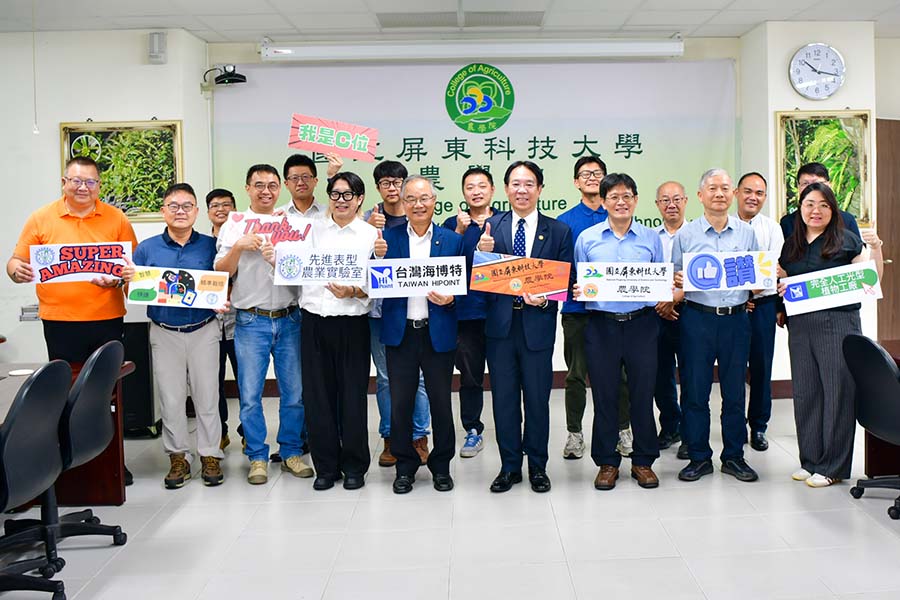
On the morning of July 30, 2025, National Pingtung University of Science and Technology (NPUST) held an unveiling and donation acceptance ceremony for its new Advanced Phenotyping Agriculture Lab (APAL). The ceremony, which took place in the College of Agriculture, marked a significant step in the university’s efforts to enhance its smart agriculture research capabilities. The establishment of the lab was made possible by a donation from Taiwan Hipoint Co., Ltd., which provided phenotypic sensing instruments and other smart agricultural equipment. This generous contribution will help promote agricultural technology research at NPUST and serves as a new model for successful collaboration between industry and academia. NPUST’s president, Chin-Lung Chang, presented a certificate of appreciation and a plaque to Taiwan Hipoint Chairman Chin-Pin Chang Chien in recognition of his outstanding contributions they have made to agricultural education and innovative research. Both parties are working together to promote the vigorous development of smart agriculture in Taiwan. A number of researchers and faculty members attended the ceremony, including Da-Gin Lin and Yuan-Kai Tu two associate researchers at the Taiwan Agricultural Research Institute (TARI), Ministry of Agriculture; Jue-Liang Hsu: Dean, NPUST College of Agriculture; Director Yi-Hsien Lin of the Department of Plant Medicine; Director Ke-Chung Peng of the Bachelor’s Program in Agricultural Technology; Director Yu-Shen Liang of the Department of Plant Industry; and Assistant Professor Hsing-Ying Chung and Assistant Professor Chia-Ying Chang of the same department. NPUST President Chin-Lung Chang expressed his gratitude to Chin-Pin Chang Chien, Chairman of Taiwan Hipoint Co., Ltd., for his generous support. The donation of the advanced phenotyping sensing instruments and smart agricultural equipment will greatly benefit the university’s College of Agriculture. President Chang emphasized that the development of smart agriculture requires moving beyond traditional thinking. He highlighted that using high-level equipment to precisely control crop physiology and environmental conditions will drive agricultural digitization and automation. He also expressed his hope that the new lab will become a core hub for smart agriculture and gradually transform NPUST into an internationally competitive research center. Chairman Chin-Pin Chang Chien noted that this collaboration is more than just a donation; it symbolizes a deeper, long-term partnership between the two parties. He pointed out that the new Advanced Phenotyping Agriculture Lab (APAL) is one of the few high-level agricultural research platforms in Taiwan to be proactively supported by a private company. This collaboration, he said, demonstrates the university’s forward-looking global vision, and he hopes the lab will become a key base for promoting smart agricultural research and international talent exchange.
2025-07-23
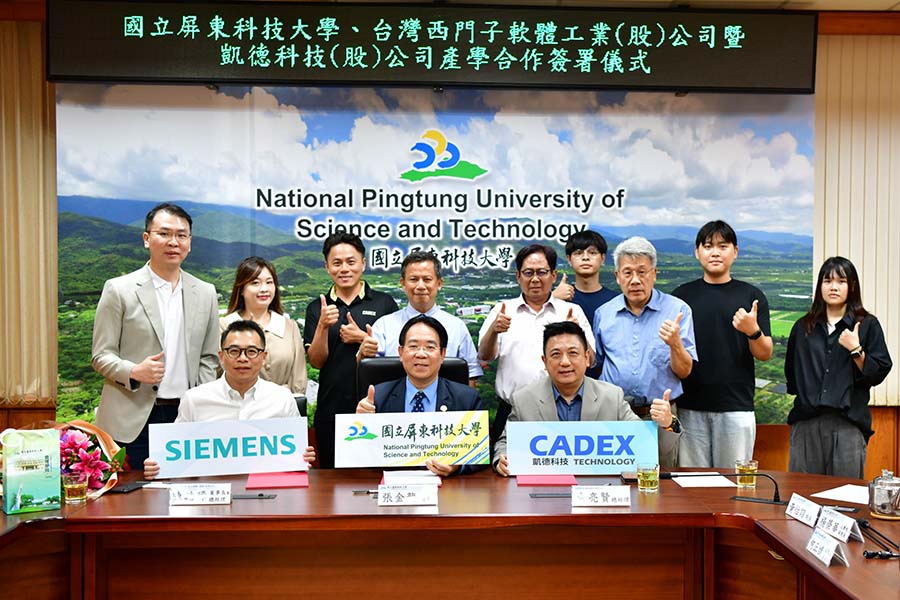
In response to global net-zero trends and the increasing pressures to transition to smart manufacturing, National Pingtung University of Science and Technology (NPUST) signed an industry-academic cooperation agreement with Siemens Digital Industries Software (Taiwan) and their partner, Cadex Technology Co., Ltd., on July 23 (2025) to jointly promote the cultivation of talent in the area of digital technology and sustainable development. The parties intend to collaborate on the entire product development process: from mechanical design, circuit and pipeline design, and simulation analysis, to CNC manufacturing, technical publications, and thermal flow analysis. The partnership will also allow NPUST to add depth to its practical-based education while strengthening the connection between the campus and outside industries—ultimately creating a new chapter in their “Smart Campus × Green Energy Industry” playbook. NPUST’s President, Chin-Lung Chang, expressed his gratitude to Cadex Technology for assisting Siemens Digital Industries Software (Taiwan) on the industry-university collaboration efforts and for providing a wealth of practical software resources for students, particularly with respect to digital twins in industrial design and manufacturing analytics. This tripartite collaboration aims to cultivate the type of talent needed by industry, while narrowing the gap between learning and application, and encouraging faculty and students to actively engage in industry exchanges and collaborations. It will also enhance students’ employability and the school’s capacity for practical education. Howard Chen, the Chairman and General Manager of Siemens Digital Industries Software (Taiwan), said, “NPUST is located in the heart of southern Taiwan, close to the Pingtung Agricultural Biotechnology Park, the Southern Taiwan Science Park, and several major industrial centers, and it has unlimited development potential. We look forward to working together to build Southern Taiwan’s Green Silicon Valley and cultivate innovative practitioners for the sustainable era through advanced design platforms and AI technology.” Daniel Yu, General Manager of Cadex Technology, said, “Solid Edge is Siemens’ key platform for smart design and manufacturing, and the latest version integrates AI and cloud capabilities. This collaboration will help students build complete curriculums and develop practical skills. It will also promote the deep integration of higher education and industry, and achieve the goal of immediate employment at graduation. Together, we will forge a new chapter in the development of Taiwan’s technology industry.”
2025-07-18
On July 17, 2025, the Taiwan Ecotourism Regional Revitalization Alliance (TERRA) hosted the Liugui Mountain Life Travel Industry Matchmaking Tour, giving focus to sustainability experiences and practical applications. Seven travel agencies from northern, central, and southern Taiwan were invited to visit some of Liugui’s iconic cultural and ecological locations and explore the tourism potential. The organizers also invited the National Pingtung University of Science and Technology (NPUST) carbon inventory team to conduct carbon inventory research and carbon footprint calculations. A full-day itinerary was scheduled with guides providing the visitors with a thorough understanding of the region’s unique tourism resources. Professor Mei-hui Chen, who is part of NPUST’s USR Satoyama Economies Team stated that the Liugui Ecotourism Destination Marketing Organization (DMO) has accumulated 20 years of experience in the area of product and services provision. It also has the necessary resources to connect with the market and establish a viable business model. They look forward to collaborating with travel agencies on their ecotourism projects, so that they can provide domestic and international visitors with rich encounters with rural mountain life and create more possibilities for domestic tourism. Local communities must also strengthen their efforts to attract target audiences by continuously optimizing their itineraries and products while working to preserve ecological and cultural assets. Professor Mei-hui Chen also pointed out that the Liugui Ecotourism DMO embraces sustainable tourism and local revitalization and caters to the needs of corporate ESG initiatives, outdoor education, public sector delegations, and inbound international tour groups. By addressing various national policies, SDGs, and the net-zero carbon emissions, travel can be more than just a relaxing experience; it can also be a concrete step towards sustainable living.